
How to Pack for a Driving Tour in a Sports Car
Small trunk, soft top, five or more days on the road. The sports car traveler’s guide to packing smart for a driving tour — what fits, what doesn’t, and the strategies that make it work.
The golden rule when packing for a driving tour in a sports car is the same one most people ignore until the first morning they try to close the trunk: pack less than you think you need.
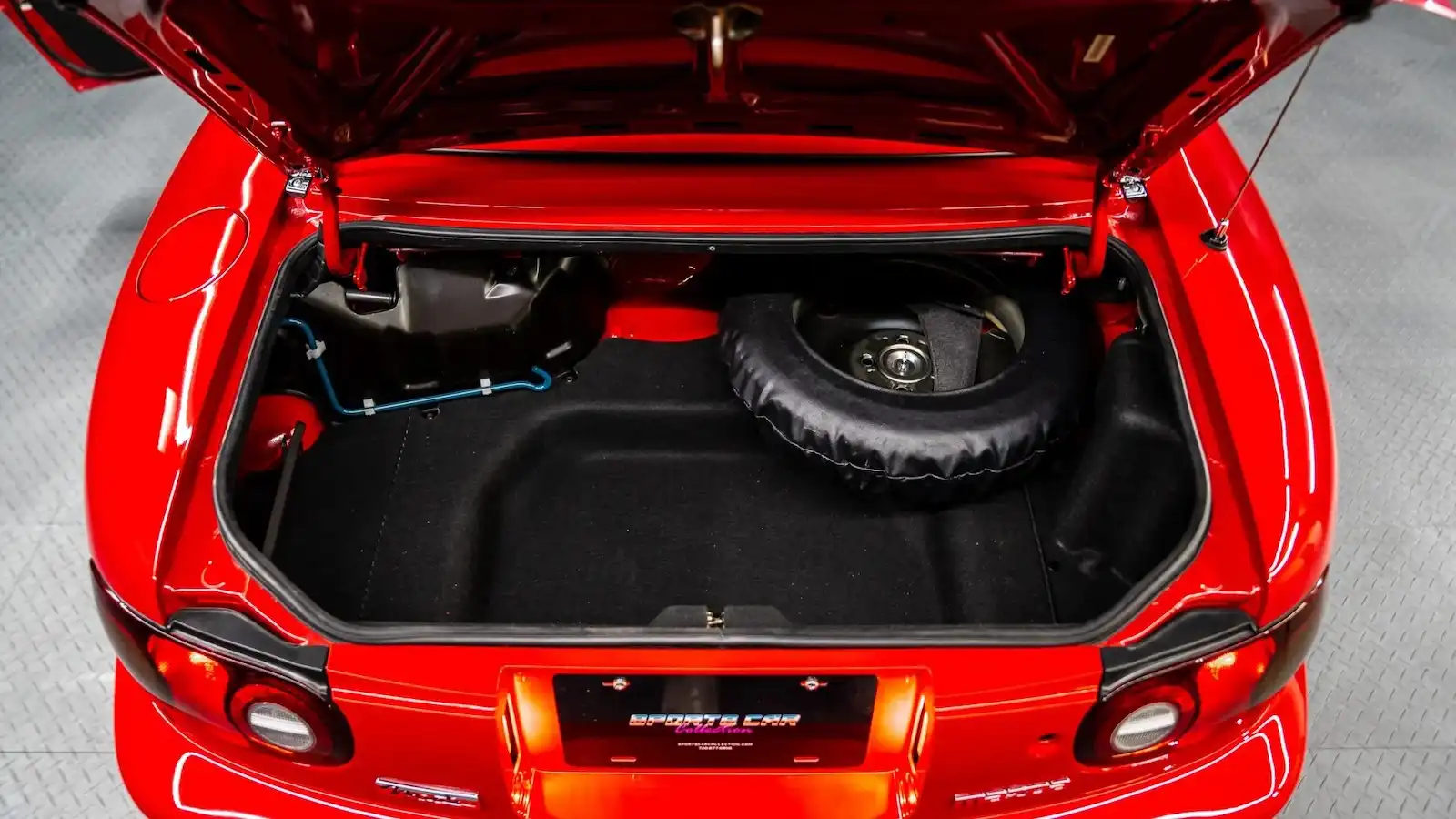
A Mazda MX-5, a Fiat 124 Spider, a Porsche Boxster, a BMW Z4 — these convertible sports cars — more accurately, roadsters — were built to be driven, and the trunk space reflects that priority. Trunk volume varies across the group: the four generations of Miata range from around 130 liters (NA, NB, ND) up to roughly 150 liters in the NC, which has the largest trunk of the four. The good news for Miata, Fiat 124, and Boxster drivers is that the soft top stows separately behind the seats — the trunk remains fully available whether the roof is up or down. The Boxster adds a front trunk on top of that, giving it two small compartments rather than one.
Mercedes convertibles with retractable hardtops — the SLK and SL series — work differently: the folded roof lives inside the trunk, which means significantly less cargo space is available when the top is down. If you are driving one of those, pack accordingly.
Get that right and the car becomes part of the experience rather than a daily source of frustration.
Understand Your Trunk Before You Pack
Sports car trunks share a shape problem that hard-sided luggage cannot solve: they are shallow, wide, and tapered. A carry-on that fits easily into an airline overhead bin may refuse to lie flat in an MX-5 trunk. A wheeled rolling suitcase almost certainly will not close the lid.
The solution is soft-sided luggage. A soft duffel or a collapsible soft bag conforms to the available space in a way that no hard shell can. It fills corners, compresses over existing contents, and tolerates the irregular ceiling height above the wheel arch. Most experienced touring drivers settle on a single medium duffel of around 40–50 liters — enough for five to seven days if you pack efficiently — plus a small personal bag for the cabin.
The Miata trunk with the soft top stowed — fully available whether the roof is up or down.
For Boxster drivers, the front trunk adds useful overflow space for shoes, a jacket layer, or items you want to access at stops without opening the rear. Combined with the rear trunk it gives the Boxster more genuine touring flexibility than the other roadsters in its class.
One final point: never place anything in the folded-top stowage area of a soft-top car — not a bag, not a jacket, not a hat. The mechanism is not designed to absorb the pressure, and repairs are expensive.
The Soft-Bag Packing Strategy
The goal is one soft bag in the trunk and one small bag in the cabin. Everything else is discipline.
Five to seven days, one duffel. This is achievable with quick-dry and lightweight fabrics. Merino wool is a touring driver’s best friend — it resists odor, packs to almost nothing, and looks presentable at dinner. A merino t-shirt worn twice is lighter and less space-consuming than two cotton t-shirts worn once. Three or four tops, two pairs of pants or jeans, underwear and socks that can be hand-washed and dry overnight — this is the foundation of a week’s wardrobe in a 40-liter bag.
Shoes are the enemy. A single pair of versatile walking shoes that can handle both cobblestones and a casual dinner will serve better than two pairs that each do one job. If you bring a second pair, they go in the frunk (Boxster) or in a shoe bag tucked alongside the duffel rather than consuming half the available depth.
Toiletries go in the cabin bag. A toiletry bag that sits in the footwell or behind the seat keeps daily-use items accessible without opening the trunk at every stop. Keep it under 1 liter — full-size bottles are for the hotel bathroom at home.
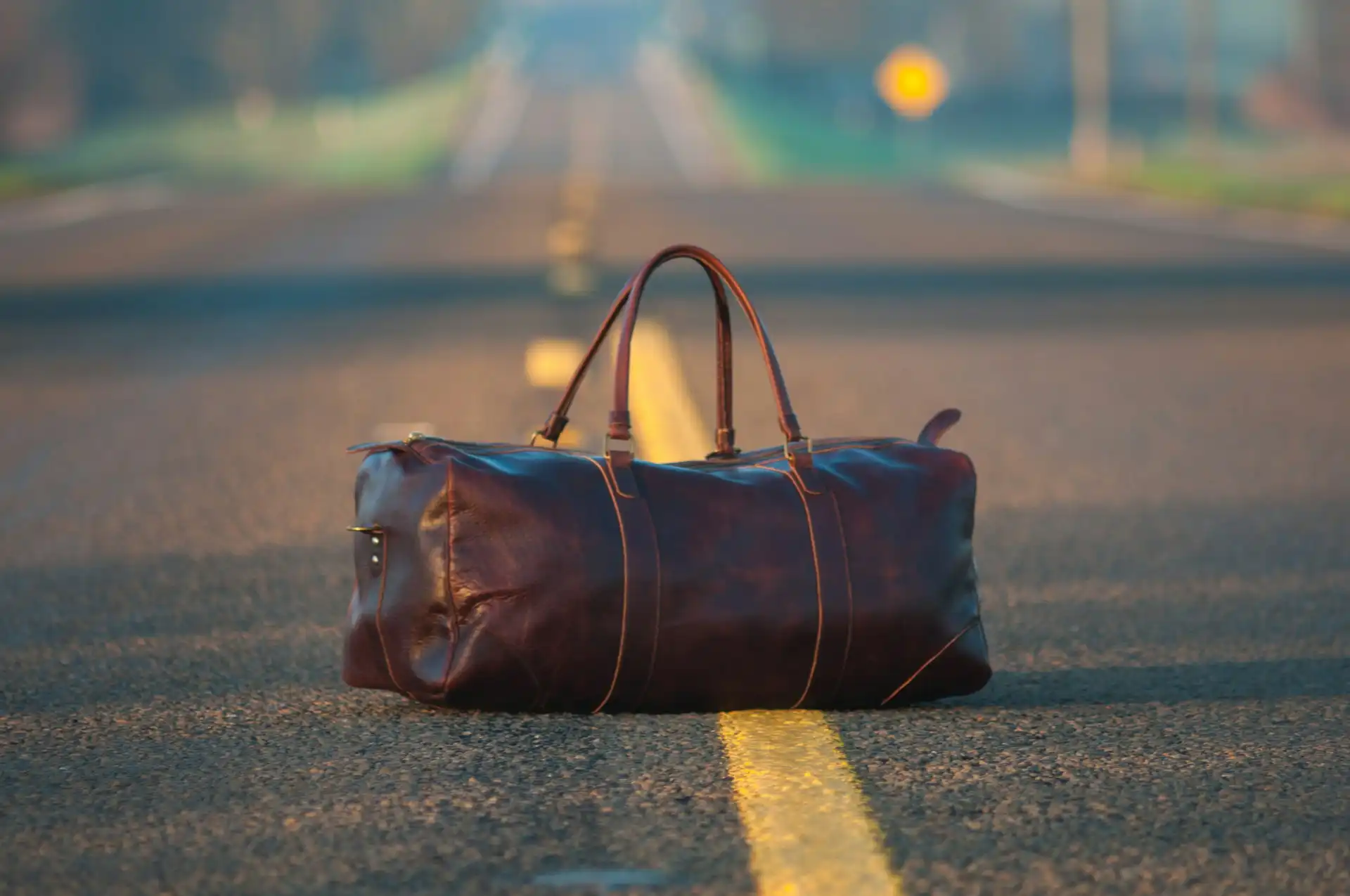
A soft duffel is the right tool for the job — it fits where hard-sided luggage cannot.
What to Wear in the Car
Top-down driving in Europe means sun, wind, and — especially in the Alps — genuine cold at altitude even in summer. The temperature at a 2,000-meter pass can be 10 to 15 degrees Celsius colder than the valley below, and the wind chill on an open road at speed makes it feel colder still.
Layers are the answer, not bulk. A light packable down jacket or a fleece mid-layer compresses to almost nothing and transforms a cold summit into a comfortable one. Wear it, don’t pack it — drape it over the seat or stow it in the cockpit when the sun returns at lower altitude.
Sunscreen and a hat are not optional. A full day in a convertible sports car is a full day of direct sun exposure — on the face, the arms, the tops of the hands on the steering wheel, and (if the hair is thinning) the top of the head. A wide-brimmed hat or a buff for the descent, SPF 50 applied before departure, and a pair of quality polarized sunglasses — these are driving essentials before they are comfort items.
Driving shoes matter more than most people expect. Thin-soled shoes — driving moccasins, lightweight sneakers, flat-soled loafers — give far better pedal feel than thick-soled hiking boots or platforms. On a spirited pass road where the feedback between foot and pedal is part of the experience, footwear is not a trivial consideration.
Clothing for the Evening
The best restaurants in Tuscany, Sardinia, the Algarve, and the Alps do not require formal attire. Smart casual is the standard at virtually every destination worth stopping at on a driving tour through Europe — a clean pair of pants and a collared shirt or a nice top covers every dinner you are likely to have. This removes the biggest packing trap of European travel: the formal outfit that takes up a quarter of the luggage space and gets worn once, if at all.
Leave the blazer at home. The good restaurants do not require one, and the trunk thanks you for it.
Hotel Laundry — The Underused Tool
For tours of a week or longer, laundry is the most effective way to extend a small wardrobe without adding weight. Many hotels offer a same-day or next-day laundry service — hand in a bag on the first morning of a two-night stay and it comes back clean before you leave. This effectively doubles your wardrobe without adding a single item to the trunk. It is worth asking at check-in wherever you are staying more than one night, as availability varies by property.
Quick-dry fabrics help with the in-between days. A merino base layer or a synthetic travel shirt washed in the sink and hung overnight is dry by morning. Pack with this in mind and the math of a 40-liter bag for seven days becomes straightforward rather than optimistic.
If Your Tour Is in Europe
Most of the packing advice above applies wherever you are driving. If your tour is in Europe, a few additional items belong in the bag before you leave home — and one of them cannot be obtained after you arrive.
International Driving Permit (IDP). Italy and Spain legally require a US license holder to carry an IDP; France, Germany, Switzerland, and Portugal strongly recommend one and many rental car companies require it regardless. The IDP is a small booklet that translates your license into ten languages — it is not a standalone document and must be carried alongside your regular license. It costs $20, is valid for one year, and can only be issued before you depart. For US drivers, the sole authorized issuer is AAA; for Canadians, it is CAA. You do not need to be a member of either to apply. Do not buy one from any other website — they are not recognized by authorities. On a Blue Strada tour you are driving the tour operator’s cars rather than renting, but the legal requirement to carry an IDP still applies if you are stopped.
Passport with at least six months of validity remaining. Most European countries require your passport to be valid for at least six months beyond your travel dates — not just your return date. Airlines check this at check-in and will deny boarding if it does not meet the threshold. Check your expiration date well before departure; US passport renewals currently take six to eight weeks by standard mail.
Power adapter. Continental Europe uses 220V / 50Hz current with Type C or Type F plugs (two round prongs). US devices run on 110V. Most modern electronics — phones, laptops, cameras — handle dual voltage automatically and only need a plug adapter, not a voltage converter. Buy one with built-in USB ports; hotel rooms in smaller European properties often have fewer outlets than expected. Get it before you leave — airport adapters are overpriced and the selection is poor.
Packing Checklist
This is the list that fits in a 40–50 liter soft duffel and a small cabin bag for a five-to-seven-day tour.
Clothing
— 4–5 tops (mix of t-shirts and one smart-casual shirt or blouse)
— 2 pairs of pants or jeans (one can double as driving and evening)
— 1 packable mid-layer (fleece or light down jacket)
— 1 light rain shell (compresses to a fist — non-negotiable in the Alps)
— 5–7 sets of underwear and socks (quick-dry fabric preferred)
— 1 pair of versatile shoes (worn; not in the trunk)
— 1 pair of lightweight driving shoes or moccasins (in the trunk if not worn)
Sun and weather protection
— SPF 50 sunscreen (face and hands minimum)
— Polarized sunglasses
— Buff or lightweight hat
— Lip balm with SPF (wind dries lips quickly at speed)
In the cabin bag
— Toiletry bag under 1 liter
— Phone and charging cable
— Power adapter (220V / Type C or F for Europe)
— Earbuds or headphones
— Any medication
— Passport (valid for at least 6 months beyond return date)
— International Driving Permit (IDP) — required for Italy and Spain, recommended everywhere in Europe
— Small wallet with cards, cash in local currency, and copies of travel documents
— Compact camera or phone mount if desired
Leave behind
— Hard-sided suitcases of any size
— Formal clothing
— Full-size toiletry bottles
— Extra shoes beyond two pairs
— Anything you are packing “just in case” that you have not needed on the last three trips
The Right Luggage to Buy
If you are shopping for luggage specifically for this kind of trip, the criteria are straightforward: soft-sided, 40–50 liters, structured enough to stand upright but compressible enough to squeeze into a shallow trunk. A rectangular duffel with a zip-around opening works better than a barrel duffel, which rolls in the trunk and won’t sit flat.
Measuring the exact depth of your specific car’s trunk before buying is worth the ten minutes it takes — trunk shapes vary more than the liter numbers suggest, and a bag that fits a Boxster rear trunk may not sit flat in an NC Miata.
For a longer tour or two travelers sharing one car, the calculation changes: one bag in the trunk, one compressed soft bag strapped firmly on top, lid closed and latched. Test this before departure day.
How a Guided Tour Changes the Equation
Everything above applies whether you are driving your own car, renting one, or joining a guided tour. But a well-organized guided tour removes several of the tightest constraints.
On Blue Strada’s guided Miata tours, a support van travels with the group and carries luggage between hotels. That means your duffel goes in the van each morning and is waiting at the hotel when you arrive — the sports car carries only what you want for the day. The van space is shared across all guests and is not unlimited, so one soft bag per person remains the expectation, but it means you are not loading and unloading the trunk every morning or worrying about whether your bag will fit in today’s car.
On tours that start and end at the same city, guests arriving early or departing late can also leave non-tour luggage at the starting hotel — a larger bag for the city days before and after, a soft duffel for the road.
See Blue Strada’s Guided Miata Tours
Sardinia, Tuscany, the Alps, Portugal, and more — all-inclusive guided tours in a fleet of Miatas and convertible sports cars. The support van handles the luggage. You handle the roads.
View All Driving Tours →
One Response
Wonderful article. Very helpful!